
 Deutsch
  English
Importance of ISA Standards in P&ID Design
In the field of process and instrumentation Design, precision and clarity are paramount. Engineers rely on standardized methods to communicate their designs effectively and to ensure seamless collaboration across teams, industries, and geographies. Among these standards, ISA (International Society of Automation) standards hold a special place for P&ID (Piping and Instrumentation Diagram) design. The ISA is a global, nonprofit organization that develops standards for automation and control systems. One of its most widely recognized contributions is the ISA 5.1 standard, which provides guidelines for creating consistent and accurate P&IDs. The diagrams are critical for depicting the relationships between equipment, piping, and instrumentation in a process system.
In this article, we will delve into why ISA standards are vital for engineers, the challenges of adhering to these standards, and how modern tools can simplify compliance.
Adhering to ISA standards offers several advantages for engineers and organizations. Below are some of the primary reasons why ISA compliance is essential in P&ID design:
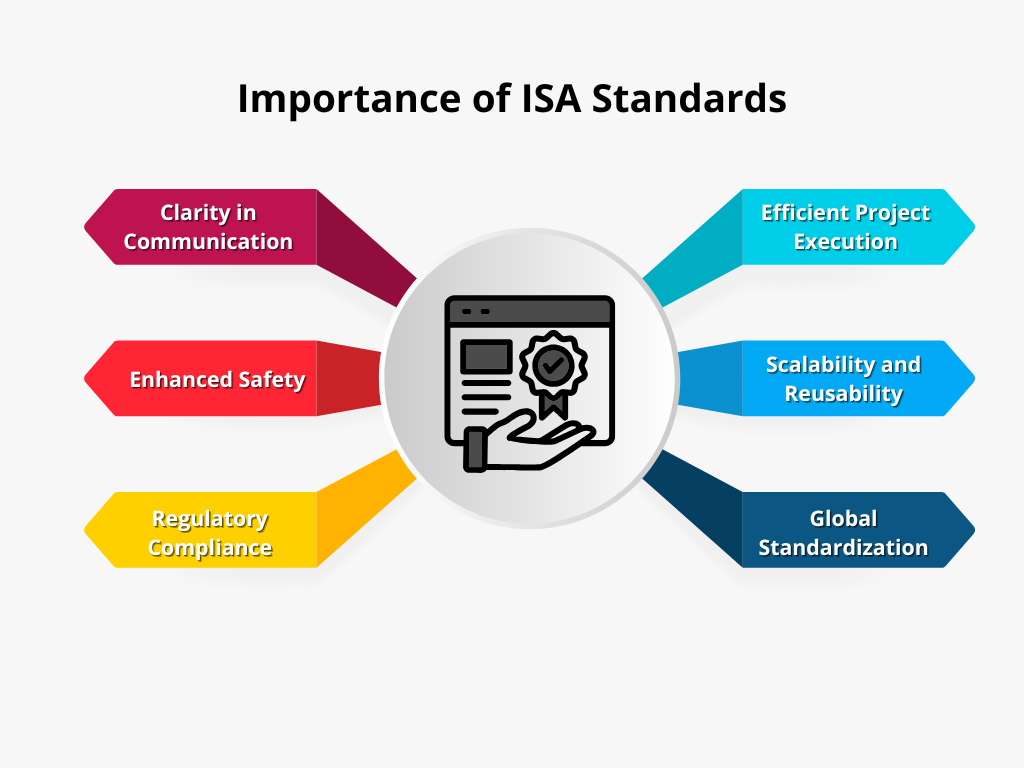
- Improved Clarity and Communication: Standardized symbols and tagging reduce the likelihood of misinterpretation, especially in multidisciplinary teams or when sharing designs with external stakeholders.
- Enhanced Safety: Accurate and standardized P&IDs are crucial for identifying potential risks, troubleshooting issues, and ensuring safe operations in complex systems.
- Regulatory Compliance: Many industries, such as oil and gas, pharmaceuticals, and chemicals, require compliance with ISA standards as part of their regulatory frameworks.
- Efficient Project Execution: ISA-compliant P&IDs streamline workflows, from initial design and review to construction, operation, and maintenance.
- Scalability and Reusability: Standardized designs are easier to scale and adapt for future projects, saving time and resources in the long term.
- Global Standardization: ISA standards create a universal language for P&IDs, enabling seamless collaboration between global teams and ensuring consistency across international projects.

Common Challenges in Meeting ISA Standards
While the benefits of ISA standards are clear, adhering to them can present several challenges:
- Complexity of Standards: Understanding and applying the intricate details of ISA standards can be time-consuming, particularly for less experienced engineers.
- Manual Errors: Creating and maintaining ISA-compliant P&IDs manually increases the likelihood of errors, leading to costly revisions and delays.
- Lack of Standardized Tools: Engineers often rely on general-purpose software that does not support ISA standards natively, requiring additional effort to ensure compliance.
- Inconsistent Documentation: When multiple team members or departments work on a project, maintaining consistency across diagrams becomes a challenge.
- Time-Intensive Processes: Manual tagging, symbol selection, and data entry can significantly slow down the design process.
Simplify ISA adhering P&ID Drafting with Visio P&ID Process Designer
For engineers and organizations looking to overcome these challenges, Visio P&ID Process Designer offers a powerful and user-friendly solution. Built as an extension to Microsoft Visio, this software is specifically designed to streamline the creation of ISA-compliant P&IDs. Here’s how it helps:
- ISA Standard Symbol Library: The software includes a comprehensive library of ISA 5.1 symbols, enabling engineers to quickly and accurately design P&IDs.
- Automated Tagging and Numbering: Visio P&ID Process Designer simplifies component tagging, reducing manual effort and ensuring consistency.
- Error-Free Design: Features like logic analyzers and quality checks help engineers identify and correct errors early in the design process.
- Seamless Integration: With support for .dwg and .pdf file formats, the software facilitates easy collaboration and data exchange.
- Time Efficiency: Pre-built templates and drag-and-drop functionality significantly speed up the design process.
- Customizable Workflows: Engineers can tailor symbols, templates, and workflows to meet specific project requirements while remaining ISA-compliant.
Conclusion
ISA standards are the backbone of effective P&ID design, ensuring clarity, safety, and compliance across industries. While adhering to these standards can be challenging, tools like Visio P&ID Process Designer make it easier than ever for engineers to create accurate and consistent designs. By automating complex processes, reducing manual errors, and providing a robust set of features, Visio P&ID Process Designer empowers engineers to focus on innovation and efficiency.
Whether you’re an experienced professional or new to P&ID design, adopting software that supports ISA standards is a step toward better engineering outcomes. Try Visio P&ID Process Designer today and experience the difference it can make in your workflow.